Are you confused by the huge variety of hose clamps available? Choosing the wrong one can mean lost sales or unreliable connections, hurting your business and reputation.
The most common types of hose clamps include worm-gear clamps (American, German, and British styles), T-bolt clamps, heavy-duty clamps, spring clamps, and ear clamps. The best choice depends on the application’s required pressure, the environment, and your local market’s preferences.
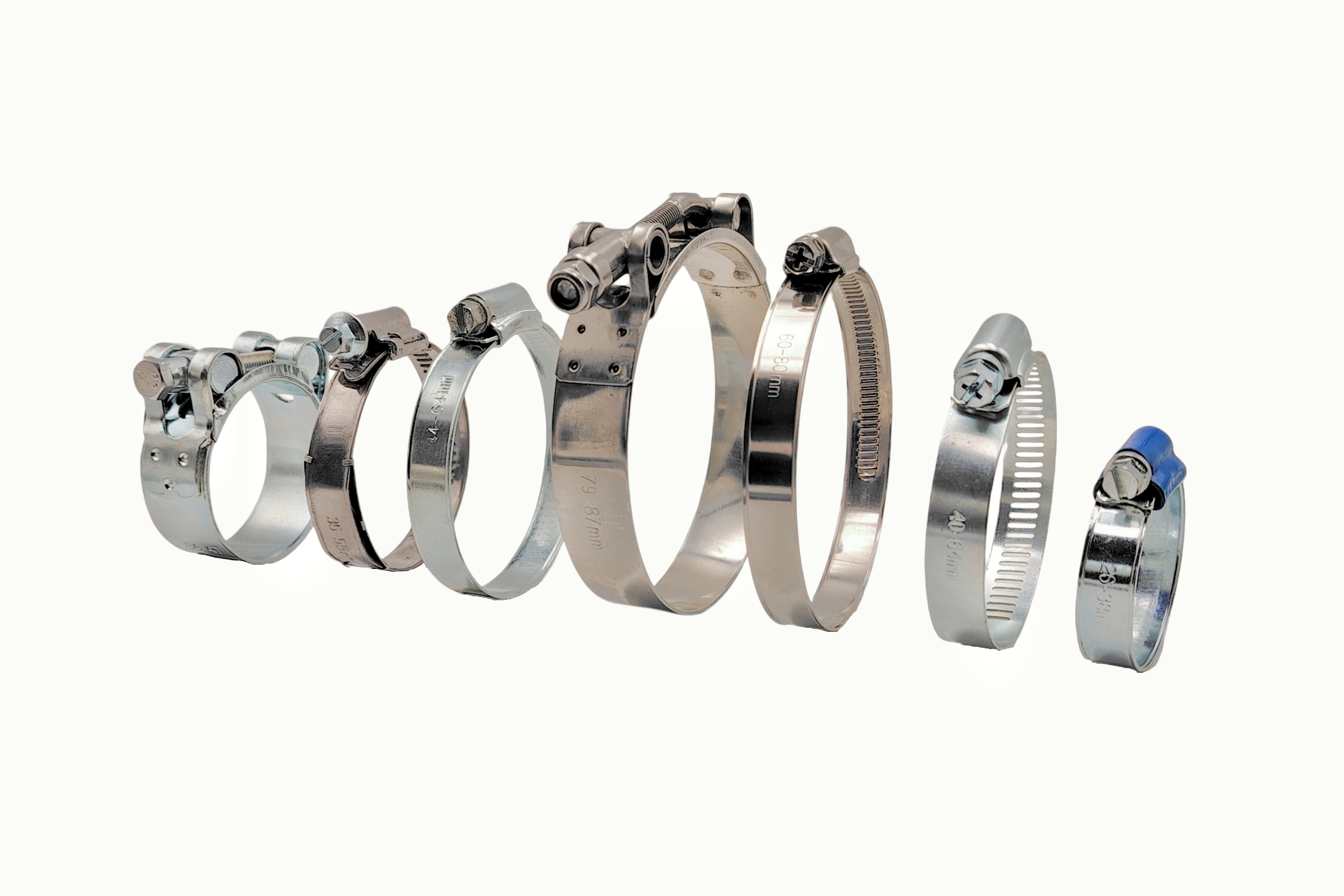
As a hose clamp manufacturer with over 16 years of export experience, I get this question all the time. Many new buyers, especially wholesalers and distributors, aren’t sure which type will sell best in their market. It’s a critical decision. Picking a clamp that’s popular in the US might not work in a market that prefers a German design. Understanding these differences is the first step to stocking your shelves with products that will actually move. Let’s break down the main categories so you can choose with confidence.
Worm-Gear Clamps: American vs. German vs. British, What’s the Real Difference?
Do you find it hard to tell the difference between American, German, and British style clamps? They look so similar, but picking one just by its appearance can be a big mistake for your inventory.
The main difference is in the band design. American style clamps have perforated bands, German styles have embossed (non-perforated) bands, and British styles have their own unique housing. The best choice often depends on what your local customers are used to buying.
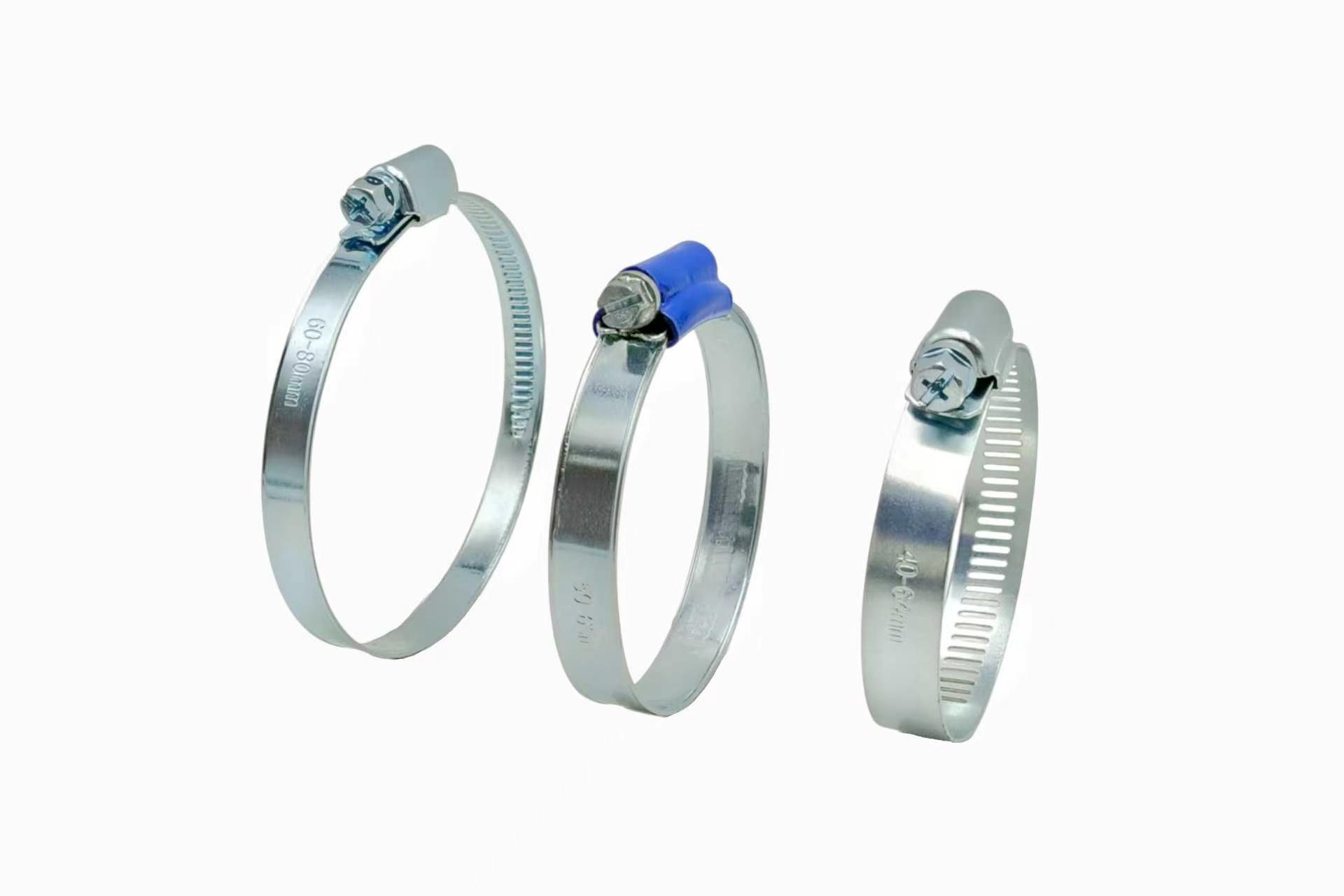
When you’re starting out, it’s tough to know which style will be a best-seller. I remember an Argentinian customer who was new to the industry. He was unsure which type would be more popular, so he asked me for quotes on several materials for both German and American style clamps. After comparing my prices with the situation in his local market, he decided to place a trial order for the German style. The clamps sold very well. That trial order turned into a long-term partnership, and he continues to re-order from us regularly. This shows how important it is to match the clamp type to your specific market. If the torque and application are similar, the choice often comes down to customer preference.
Key Differences in Worm-Gear Clamps
Let’s look closer at what sets these three main styles apart. While they all use a worm-drive mechanism, the small details in their construction affect their performance and market suitability.
| Feature | American Style | German Style | British Style |
|---|---|---|---|
| Band Design | Perforated (slots cut through the band) | Embossed (threads pressed into the band) | Embossed, similar to German |
| Housing | Standard, often spot-welded | Unique, non-welded interlocking design | Unique housing with higher screw thread |
| Benefit | High clamping force, widely available | Smooth inner band protects soft hoses | High torque, good sealing pressure |
| Common Markets | USA, Latin America, India | Europe, Russia, South America | UK, Middle East, India |
Understanding these points is crucial. For example, the smooth, non-perforated band of a German style clamp is gentler on soft silicone hoses, preventing damage as it’s tightened. The American style’s perforated band, on the other hand, is a classic design that many mechanics and DIY users know and trust. Your decision should be a balance between technical suitability and what your customers expect to see.
When Do You Need a Heavy-Duty or T-Bolt Clamp?
Are your standard clamps failing under high pressure or heavy vibration? Using a clamp that’s not strong enough for the job can lead to dangerous and costly leaks in critical systems.
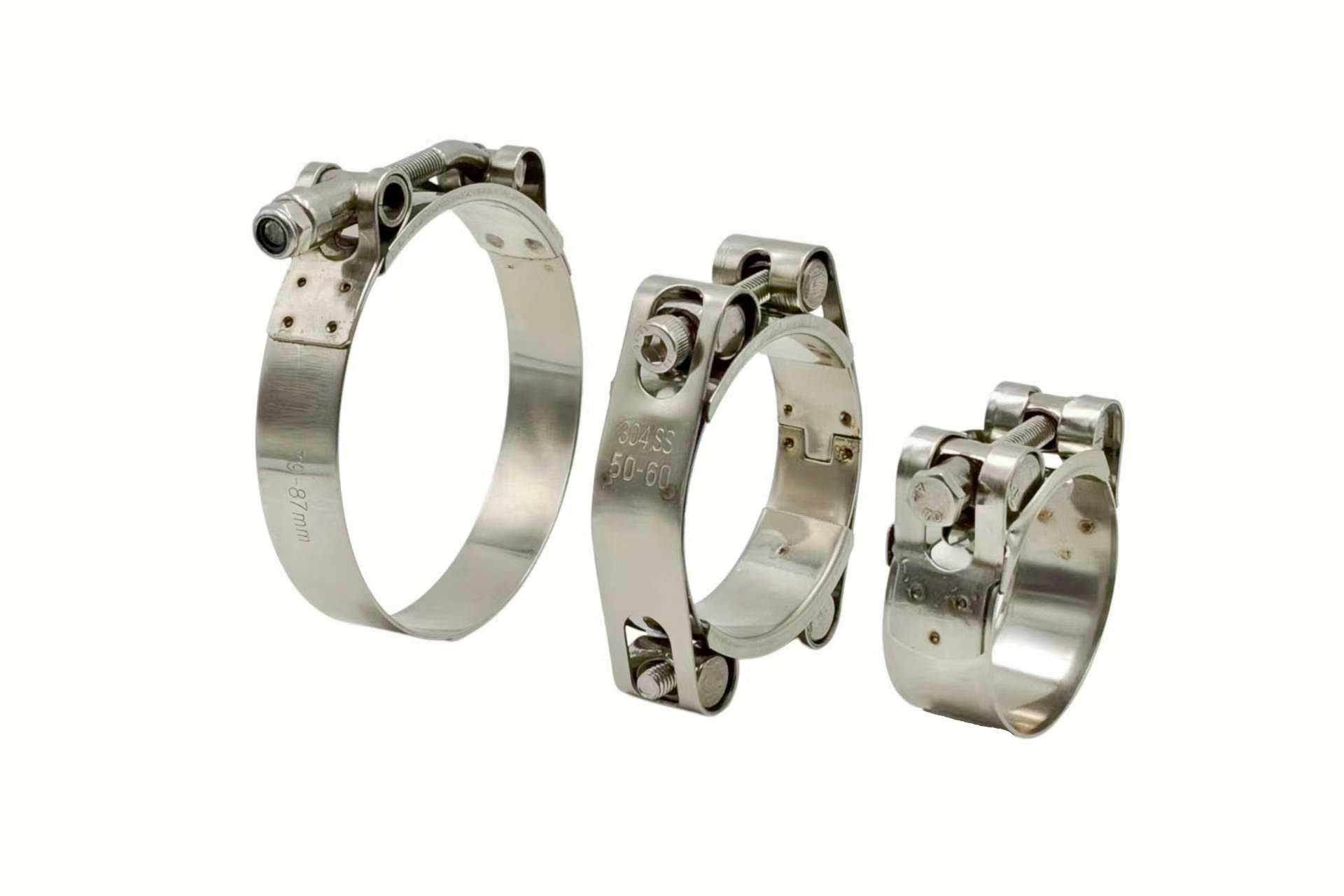
Use heavy-duty or T-bolt clamps for high-pressure applications like turbochargers, industrial machinery, marine engines, or large irrigation hoses. They provide significantly higher and more reliable clamping force than standard worm-gear clamps, ensuring a secure, leak-proof seal.
For everyday automotive or plumbing uses, a good quality worm-gear clamp is usually enough. But when you move into more demanding territory, you need to upgrade your hardware. Think about the massive pressure in a truck’s charge air cooler system or the constant vibration on a marine vessel’s exhaust. In these situations, a standard clamp just won’t hold. The connection will eventually loosen, leading to performance loss or even catastrophic failure. That’s where T-bolt and other heavy-duty clamps prove their worth. They are engineered specifically for these tough jobs.
Choosing Clamps for High-Torque Applications
The strength of T-bolt and heavy-duty clamps comes from their robust construction. They are built to handle much higher tightening torque without stripping or breaking.
- T-Bolt Clamps: These feature a T-shaped bolt and a solid metal trunnion. This design allows for very high torque to be applied evenly around the hose. The band is also wider and thicker than on a worm-gear clamp. They create a 360-degree seal that is perfect for high-pressure fluid and air connections.
- Heavy-Duty Clamps (Super Clamps): These are the strongest worm-gear style clamps available. They have a solid, reinforced band and a heavy-duty bolt-and-nut mechanism instead of a simple screw. They are designed to provide extreme clamping force for applications on trucks, tractors, and industrial equipment.
| Clamp Type | Typical Max Torque | Common Applications | Key Feature |
|---|---|---|---|
| Standard Worm-Gear | 4-8 Nm | Automotive hoses, plumbing, DIY | General purpose, easy to use |
| T-Bolt Clamp | 15-25 Nm | Turbo systems, industrial pipes | T-bolt and trunnion, 360° seal |
| Heavy-Duty Clamp | 20-30+ Nm | Heavy machinery, agriculture, marine | Reinforced band, bolt-and-nut closure |
When a customer tells me they need to connect a large, rigid pipe on a ship or a piece of heavy construction equipment, I immediately recommend a T-bolt or heavy-duty clamp. It’s not just about selling a more expensive product; it’s about providing the correct solution that guarantees safety and reliability.
What About Clamps for Special Environments or Uses?
Do you assume one type of clamp works for every situation? Using a standard clamp in a corrosive environment or for a specialized application can cause it to fail quickly and unexpectedly.
For special environments, material choice is key. Use 316 stainless steel for corrosive settings like marine or farm use. For specific applications, choose clamps like spring clamps for fluctuating temperatures or ear clamps for a tamper-proof fit.
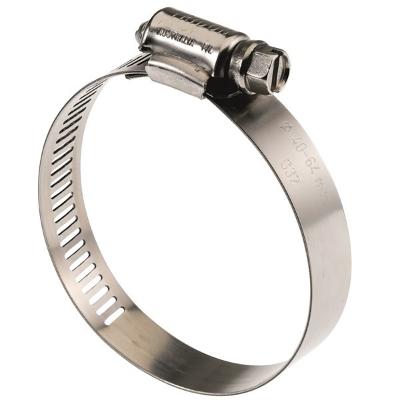
The environment where a clamp is used is just as important as the pressure it needs to hold. I once had a customer who used standard zinc-plated clamps on agricultural equipment. After just one season of exposure to fertilizers and moisture, the clamps were completely rusted and failing. He switched to our 316 stainless steel clamps, and the problem was solved. This material contains molybdenum, which gives it superior resistance to chlorides and other corrosive chemicals. It’s the go-to choice for marine applications, chemical plants, and agriculture. It costs more upfront, but it saves a lot of money and headaches in the long run.
Matching the Clamp to the Job
Beyond just materials, some clamps are designed for very specific tasks. Using the right one can make an installation easier, safer, and more reliable.
- Specific Sizing for Applications: Certain industries have unofficial standards. For example, in many regions, small 8mm band American-style clamps are the preferred choice for low-pressure gas lines and fuel vapor hoses.
- Constant Tension Clamps: These clamps, often spring-band style, are essential for systems with temperature fluctuations, like automotive coolant hoses. As the hose expands and contracts with heat, the spring action of the clamp maintains consistent pressure, preventing leaks.
- Ear Clamps (Oetiker Clamps): When you need a permanent, tamper-proof connection, an ear clamp is the answer. They are installed with a special pincer tool that deforms the “ear,” creating a tight, fixed-diameter clamp. You’ll find them on automotive CV boots and some fluid lines where you don’t want anyone to easily loosen the connection.
Here’s a quick guide to these specialty clamps:
| Clamp Type | Best Use Case | Main Advantage | Installation |
|---|---|---|---|
| 316 Stainless Steel | Marine, agriculture, chemical | Superior corrosion resistance | Standard screw/bolt |
| Constant Tension | Coolant/heater hoses | Adjusts to temperature changes | Pliers or socket |
| Ear Clamp | CV boots, permanent connections | Tamper-proof, 360° seal | Special pincer tool |
| V-Band Clamp | Turbochargers, exhaust flanges | Connects flanged pipe ends | Single T-bolt closure |
Knowing about these special types allows you to serve a wider range of customers and solve more complex problems, positioning you as an expert in your field.
Conclusion
Choosing the right hose clamp means considering the application, pressure, environment, and your market’s preferences. Understanding these key types helps you select the best product and serve your customers effectively.# Markdown syntax guide