Struggling with clamps that rust too soon? This failure can damage your reputation and business. The real secret to long-lasting quality lies in the screw’s surface treatment.
The best surface treatment for modern hose clamp screws is Trivalent Chromium (Cr3+) Zinc Plating. It is environmentally friendly, meets strict international standards like those in Europe, and provides excellent corrosion resistance, often lasting over 72 hours in salt spray tests before showing white rust.
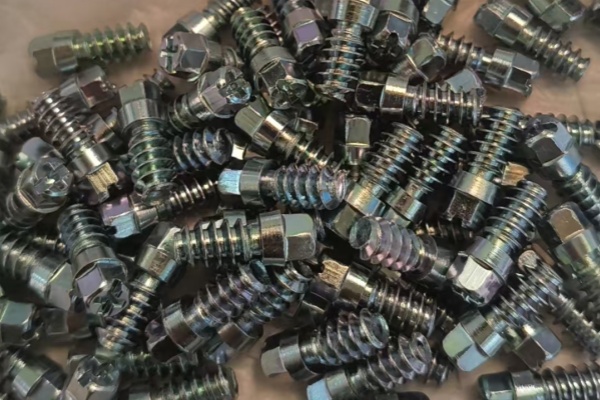
You probably handle hose clamps every day. But do you ever stop to think about the smallest part, the screw? It seems simple, but the quality of that tiny screw can make or break the entire clamp. As a manufacturer, I’ve seen firsthand how a good screw can mean a happy, repeat customer, while a bad one can lead to failures and frustration. The difference often comes down to one thing: the surface treatment. Let’s look closer at why this detail is so important for the quality and reliability you deliver to your own customers.
What Is The Difference Between Trivalent and Hexavalent Chromium Plating?
You hear technical terms like “trivalent” and “hexavalent” thrown around. Not knowing the difference could mean you’re accidentally buying outdated or even non-compliant products for your market.
Trivalent chromium (Cr3+) plating is the modern, eco-friendly standard that is safe and widely accepted, especially in Europe. Hexavalent chromium (Cr6+) is an older, toxic method that is now restricted or banned in many parts of the world due to environmental and health concerns.
For years, hexavalent chromium (Cr6+) was the go-to for plating. It gave good corrosion resistance and had a recognizable yellow-ish tint. However, we now know it’s not good for the environment and can be harmful to people’s health. Because of this, many regulations, like the RoHS directive in Europe, have banned its use in many products, including automotive parts.
This is where trivalent chromium (Cr3+) comes in. It’s the modern, responsible choice. It doesn’t have the same environmental or health risks. At first, there were questions about whether its performance could match the old method. I can tell you from my experience that today’s Cr3+ plating processes are excellent. They provide the high-level corrosion resistance we need, especially for demanding markets.
Here is a simple table to show the main differences.
| Feature | Trivalent Chromium (Cr3+) | Hexavalent Chromium (Cr6+) |
|---|---|---|
| Environment | Eco-friendly | Toxic, pollutes |
| Health | Much safer for workers | A known carcinogen |
| Regulations | Compliant with global standards (RoHS) | Banned in many applications |
| Market Access | Required for Europe and other markets | Blocks access to modern markets |
For my business and for my customers, the choice is clear. We use Trivalent Chromium to ensure our products are safe, high-quality, and can be sold anywhere in the world without issues.
How Do We Test The Quality Of Screw Plating?
A supplier tells you their clamps are high quality. But how can you be sure? You worry that the clamps will look good on arrival but start rusting after just a few weeks.
We verify plating quality with a standardized Salt Spray Test (SST). This test puts the screws in an accelerated corrosion environment. A high-quality Trivalent Chromium plated screw should withstand this test for at least 72 hours before showing white rust.
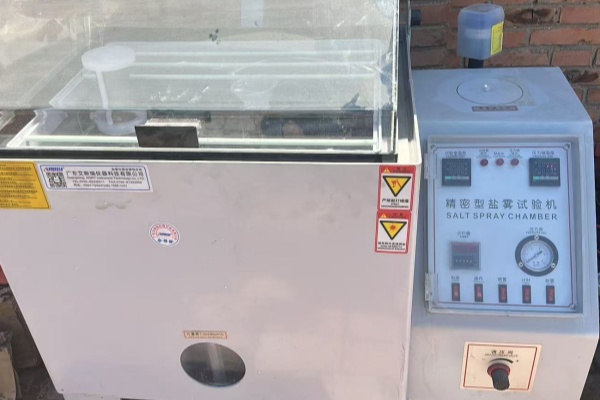
You can’t just look at a screw and know how it will perform in the real world. That’s why we have to test it. The most important test for surface treatment is the Salt Spray Test, or SST. We place the screws inside a special chamber that’s filled with a warm, salty fog. This environment is extremely corrosive, much more so than normal outdoor conditions. One hour in this chamber can be like days, weeks, or even months of real-world exposure, depending on the standard.
What we look for are two types of rust. The first is “white rust.” This is a white, powdery substance that shows up when the outer zinc plating itself starts to corrode. This is the first sign of failure. The second is “red rust.” This is the classic orange-brown rust you see on steel. Red rust is much more serious because it means the salt has eaten all the way through the protective plating and is now destroying the base steel of the screw. For a good quality German-type hose clamp screw, we expect it to last over 72 hours before any white rust appears, and over 168 hours before any red rust. Sadly, many common screws I’ve tested from the market fail in just four or five hours. This is why we are so strict about testing.
What Does A Real 72-Hour Salt Spray Test Look Like?
Test results and data sheets can seem abstract. You might wonder if we only show you the perfect results, not what really happens during a test. I believe in being transparent.
Our recent 72-hour test on a new batch of Cr3+ screws was a success. While we saw some minor cosmetic discoloration early on, the screws successfully passed the 72-hour mark with no white rust, proving the underlying protective coating was strong and effective.
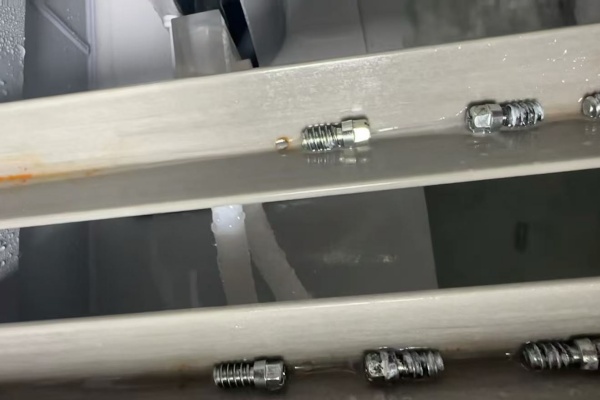
I want to share the story of a test we just finished. We have been searching for a new plating partner who could guarantee a 72-hour salt spray test for our Trivalent Chromium screws, which is essential for our European clients. We found a promising factory and sent them a sample batch to plate. Then, we put those screws into our own salt spray chamber to see the results for ourselves.
Here’s what happened:
- At 11 hours: I noticed a slight white haze on some of the screw heads. This wasn’t white rust. It was the sealant, a clear topcoat, breaking down. The main zinc layer was still completely fine.
- At 26 hours: Some of the screws started to look a bit grayish-black. This was the passivation film being corroded. This is actually part of its job. The passivation layer is designed to sacrifice itself to protect the zinc layer underneath.
- From 26 to 72 hours: The screws stayed in this grayish-black state. I checked them constantly. At the end of the full 72 hours, the test was over. The result: No white rust had appeared.
My conclusion is that the screws passed the test. They successfully prevented white rust for 72 hours. The passivation film was damaged, but it did its job. The reason it wasn’t a perfect, flawless result is that our sample screws were plated in a large batch mixed with other companies’ products. For our official mass production orders, the plating factory will run our screws in a dedicated batch. We will work with them to adjust the concentration of the sealant and the passivation solution. This will prevent the early blackening and give us a perfect result every time. This process of testing and improving is how we guarantee our quality.
Conclusion
Choosing the right screw treatment is not a small detail; it’s the key to a durable and reliable hose clamp. We focus on these details to ensure our products meet your standards.